BlogProduct & Business Innovation
Digital Transformation: Beyond the Buzzword
Real-world strategies for implementing meaningful digital transformation that drives business growth and operational efficiency.
Niraj Pahadi
12/7/2024
8 min read
Digital TransformationStrategyBusiness
Introduction
“Digital Transformation” you've seen it everywhere: webinars, conferences, LinkedIn posts. But what does it really mean?
Digital transformation goes beyond simply adopting new technologies — it involves rethinking business models, systems and organizational culture. This includes moving manual tasks online and requires a willingness to experiment, learn from failures and embrace new ways of doing things.
Why digital transformation matters ?
Digital transformation helps businesses stay competitive by boosting efficiency, streamlining processes, and improving data management. It automates tasks, enhances customer experiences through personalization and seamless services, and supports data-driven decision-making. By fostering innovation, promoting sustainability, and reducing costs, it not only adapts to market changes but also attracts top talent and creates new growth opportunities.
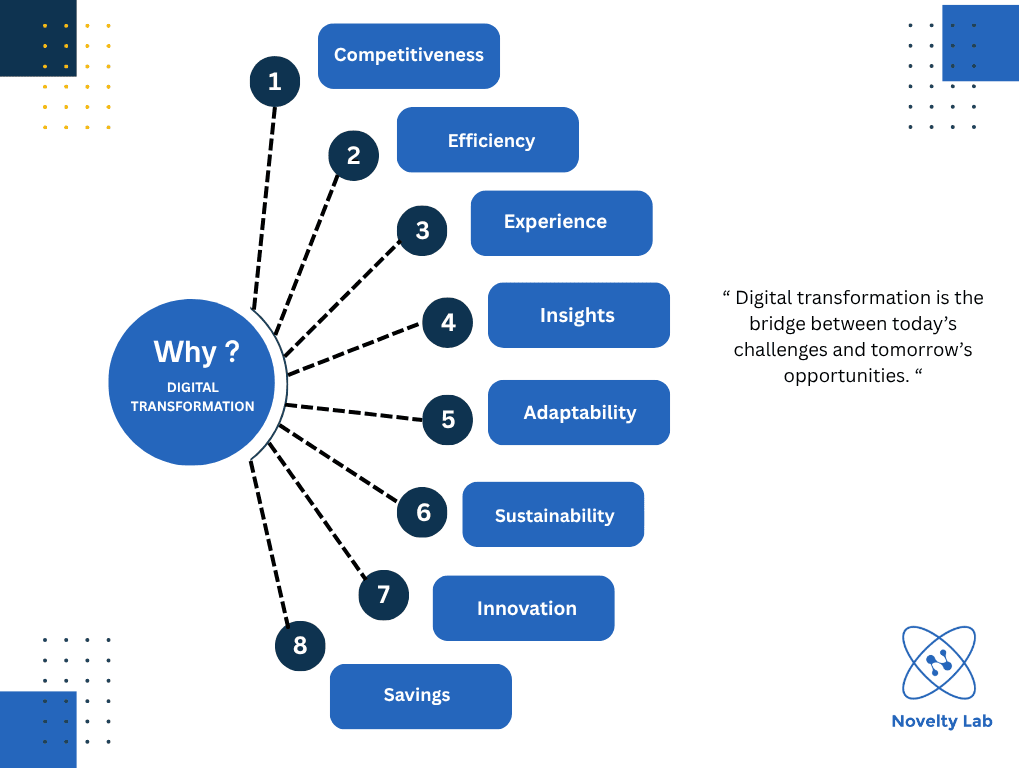
Embracing digital tools fundamentally reshapes how businesses operate and connect. By streamlining workflows and automating routine tasks, technology frees up employees valuable time and energy, allowing them to focus on the meaningful, strategic work that truly drives progress and boosts team productivity. Simultaneously, it revolutionizes the customer experience, offering convenient online services, personalized interactions, and quicker, smoother support. This shift away from friction makes every touchpoint more satisfying and builds stronger relationships.
Beyond efficiency and happier customers, going digital unlocks smarter decision-making. With better data at their fingertips, leaders can make informed choices and quickly adapt strategies to keep pace with changing markets. It's also a step towards sustainability, reducing paper waste and energy use through eco-conscious practices. Crucially, a modern digital workplace attracts talented people, especially those seeking innovative environments, while fostering the creativity needed to spark new ideas and explore fresh opportunities. Ultimately, by cutting down on manual processes and physical resources, it drives significant long-term savings, making the business more resilient and future-ready.
How Companies Are Changing Through Digital Transformation
Digital transformation isn't just about using new technology — it's about changing how a business thinks, works and grows. And today, companies are making serious changes to stay competitive. This change usually happens in three stages:
Past
Reactive
Present
Proactive
Future
Predictive
You react after problems occur. No forecasting — only fixing.
1. In the Past – Reactive
"We used to wait for things to break before fixing them."Traditionally, many companies operated in a reactive mode—only addressing problems after they became visible. There was little to no long-term planning or early detection. For example, in fast-paced environments like e-commerce, critical failures such as payment gateway crashes, server outages, or broken features often went unnoticed until customers experienced issues and reported them.
This approach led to significant losses: frustrated customers, revenue decline, and strained internal teams scrambling to fix problems under pressure. While reactive methods may have been unavoidable in the past due to limited tools or data, they are costly and inefficient in today's competitive landscape.
2. Right Now – Proactive
"Now we try to stop problems before they happen."Recognizing these challenges, many companies have shifted to a proactive mindset. Instead of waiting for failures, they now use real-time monitoring and data analytics to detect early warning signs. This enables them to perform maintenance, optimize performance, and resolve issues before they impact users.
For instance, IT teams monitor server loads or application response times continuously, allowing them to address bottlenecks or failures in advance. Proactive problem-solving reduces downtime, improves customer experience, and eases pressure on support teams.
3. Looking Ahead – Predictive
"In the future, we'll use AI to see what's coming and adjust in advance."Predictive transformation uses AI and machine learning to analyze past trends and real-time data to anticipate future scenarios — whether risks or opportunities. Instead of waiting or simply preventing issues, businesses prepare in advance, often adjusting strategies automatically.
In smart city management, AI systems can integrate data from weather forecasts, traffic sensors, public transport schedules, energy grids and even social media activity to anticipate surges in demand or disruptions. For example, the system could detect an incoming storm, predict its impact on power usage, traffic flow and emergency service needs, and automatically coordinate resources—rerouting buses, adjusting traffic lights, balancing energy loads, and dispatching maintenance crews before issues occur. This kind of integrated prediction not only prevents problems but transforms entire city ecosystems into proactive, self-optimizing systems with the potential to save millions in operational costs, prevent large-scale outages, reduce accident rates and significantly improve citizen safety and satisfaction.
Types of digital transformation
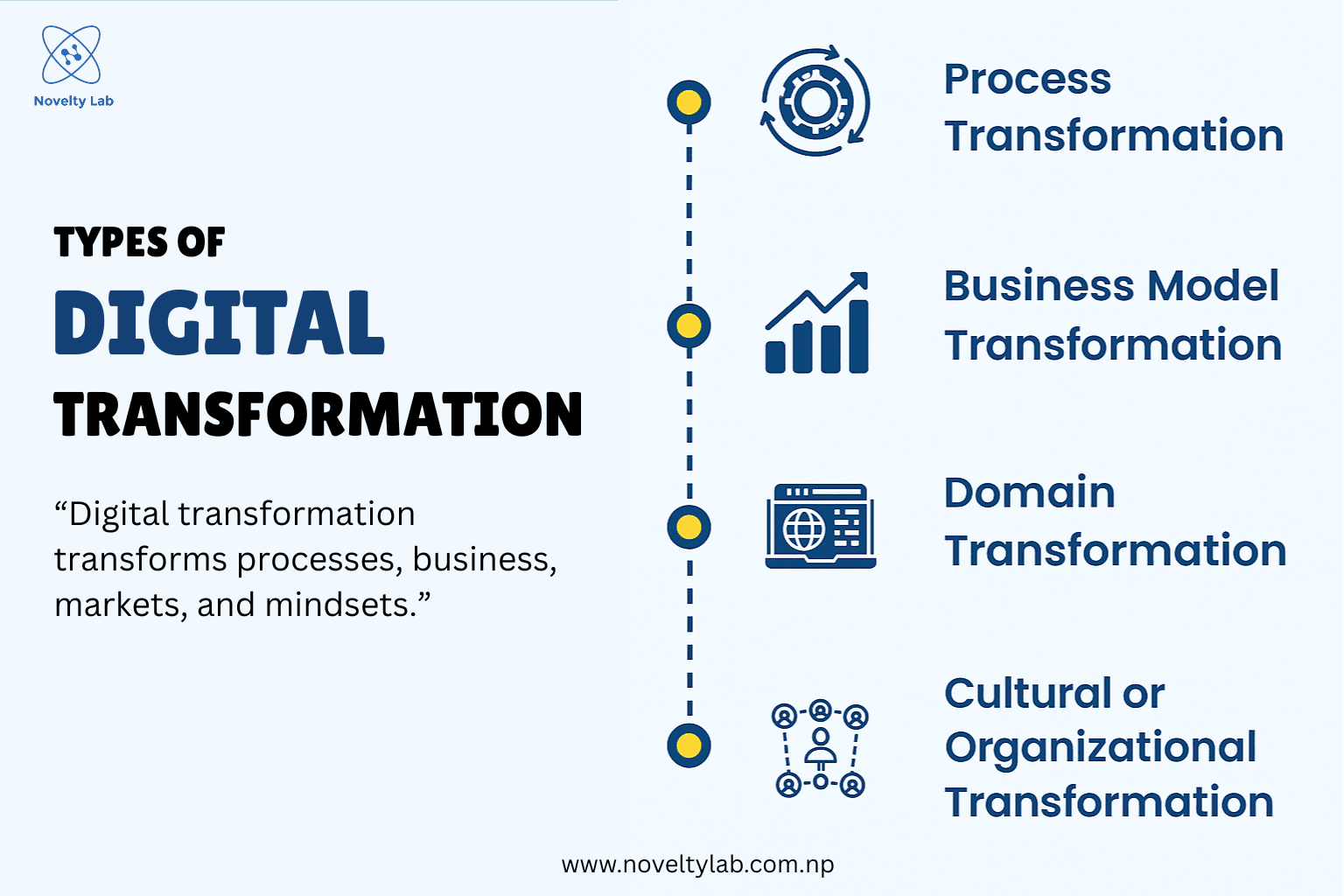
When talking about the types of digital transformation, it's important to remember that it's not about technology for its own sake—it's about choosing the right digital approach to achieve specific business goals. Each type focuses on creating real value, whether by improving customer experiences, streamlining processes, enabling smarter decisions, or reshaping business models. The key is aligning each transformation type with clear objectives, ensuring every change solves the right problem and delivers measurable impact.
1. Process transformation
Process transformation means using technology to fundamentally improve how a company gets its internal work done. It focuses on automating manual tasks, streamlining workflows, reducing errors, and cutting costs to achieve goals like faster time-to-market or better quality. This shift often requires new software, impacts both employees and external partners, and needs careful planning for successful implementation.
2. Business model transformation
This is about boldly rethinking how your product or service reaches people. It means moving beyond small upgrades to reinvent your business for the digital age—just like Netflix swapping DVDs for streaming or Uber changing how we ride. It's driven by market shifts, new tech, and evolving customer needs, with success depending on fresh ideas and an adaptable team.
3. Domain transformation
This is about stepping into a whole new market to grow and stay competitive. It often happens when tech changes or new rivals make the old business model less viable, pushing leaders to diversify. Think IBM shifting from hardware to software and consulting, or a company selling its in-house automation tool to other businesses. It's all about spotting fresh opportunities and turning them into new revenue streams.
4. Cultural/Organizational Transformation
This is about reshaping how people within a company think, work, and collaborate. It can be sparked by leadership changes, mergers, crises, or shifts like remote work during COVID-19. The goal is to build a culture that's open, inclusive, and ready to embrace digital-first ways of working—because without the right mindset, even the best strategies can fall flat.
Digital transformation Enablers & Barriers
Digital transformation isn't just about flashy tech; it's reshaping how we work, create, and connect. It's about using powerful new tools to work smarter, spark fresh ideas, and create truly special moments for customers. But let's be honest – this journey isn't always smooth sailing. To truly thrive in this fast-changing world, we need to do more than just adopt the latest tools. We need to understand the real bumps in the road – the human hesitations, the process snags, the cultural shifts. Seeing clearly both what fuels progress and what trips us up is how we walk this path – not just with tech, but with genuine confidence and a sense of shared purpose.
1. Enablers
Think of digital transformation enablers as the wind in our sails and the tools in our hands, guiding us forward on this journey. They're the game-changers that make progress feel possible and even exciting—technologies that truly simplify our work, data that offers clear insights instead of leaving us in the dark, and teams armed with both the skills and the curiosity to keep learning and adapting. Just as important is a culture that encourages experimentation, collaboration, and embracing change without fear. These enablers—the tech, the knowledge, the talent, and the mindset—are what help us work smarter, spark innovation, and deliver better experiences for everyone. They transform possibility into progress by giving people the confidence and ability to shape the future.
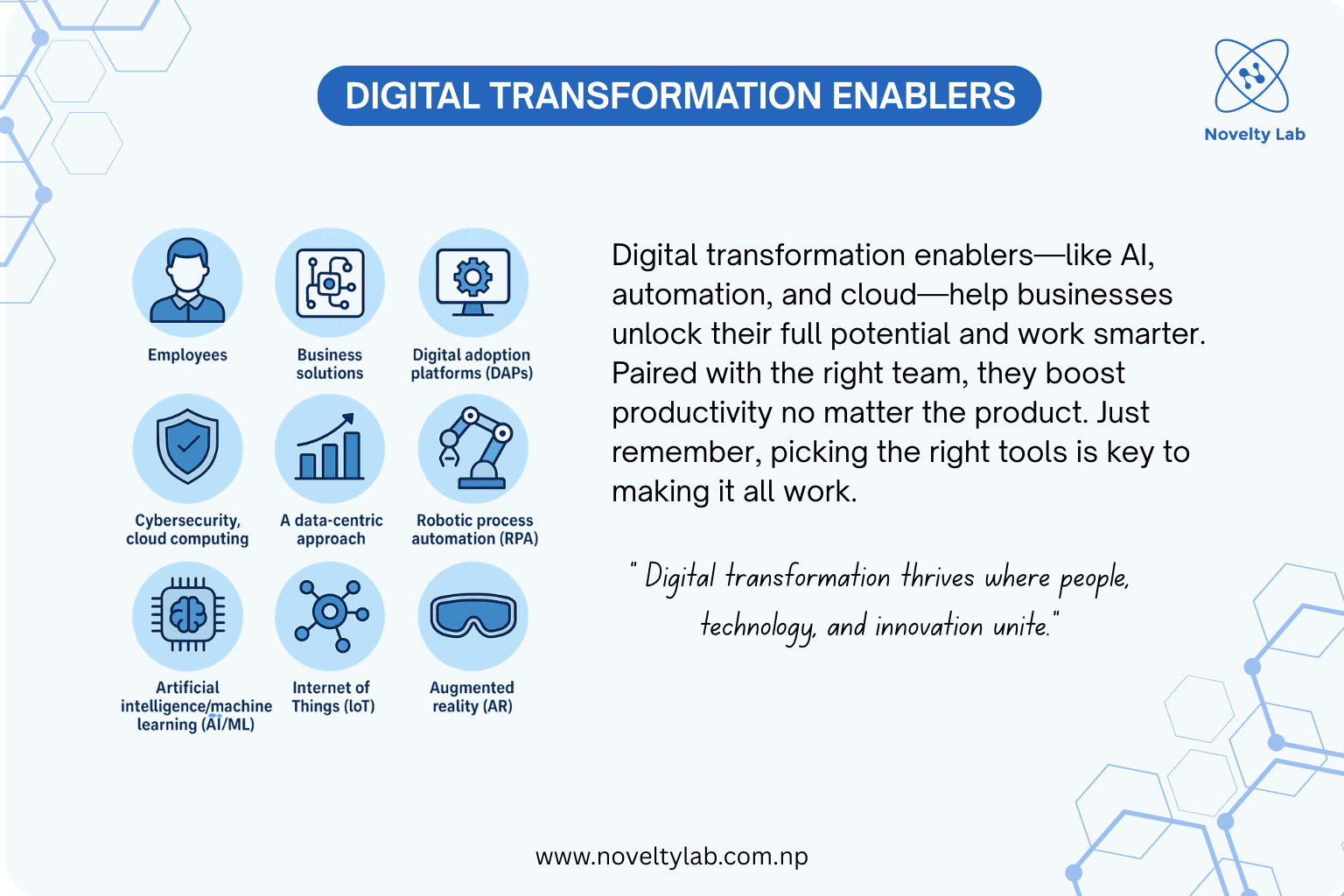
In Digital Transformation Enablers — Priority Order
1.
Employees
2.
Business solutions
3.
DAP (digital adoption platform)
4.
Cybersecurity
5.
Cloud computing
6.
A data-centric approach
7.
RPA (robotic process automation)
8.
AI/ML (artificial intelligence / machine learning)
9.
IoT (Internet of Things)
10.
AR (augmented reality)
As technology evolves quickly, CEOs and CIOs understand the need to stay ahead to remain competitive. By leveraging the right digital enablers, organizations can boost efficiency, respond faster to customer needs, and build a strong foundation for growth. For example, when a company faced a major software migration, using the right change management tools helped thousands of employees adapt smoothly while maintaining productivity. This shows how powerful the right enabler can be in driving successful digital transformation.
2. Barriers
Digital transformation often faces hurdles, with resistance to change being one of the biggest. Employees used to familiar ways may push back, so involving them early helps ease the transition. Clear communication is also crucial—leaders need to explain why changes matter, share demos, and gather feedback to keep everyone engaged. Without clear goals and measurable KPIs, progress can stall. Other challenges include outdated technology that slows implementation and tight budgets that require smart prioritizing and cost-effective solutions.
Conclusion
Digital transformation is more than just a trendy phrase—it's a real, powerful shift that's changing how businesses grow, innovate, and connect with people. It's about combining smart technology with the right mindset to create meaningful change. When done right, it helps companies work smarter, serve customers better, and stay ahead in a fast-moving world. So, beyond the buzz, digital transformation is truly about unlocking new possibilities and shaping a brighter future.